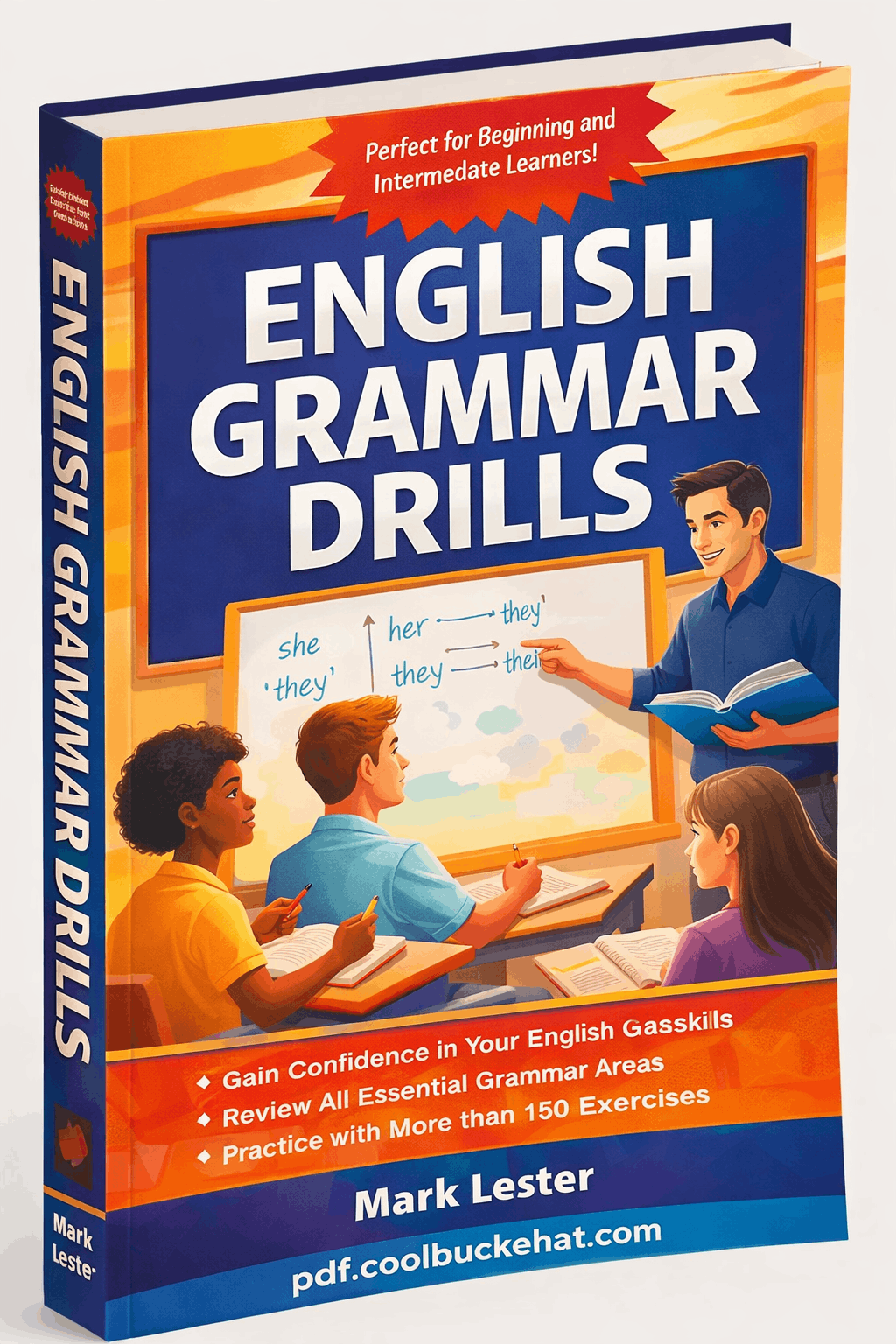
English Grammar Drills: Practice for Accuracy and Fluency
English Grammar Drills are one of the most effective ways to improve accuracy and build confidence in speaking and writing. While learning grammar rules is important, real progress happens through practice. Drills help learners repeat structures until they become natural and automatic.
Many students understand grammar when reading a rule. However, they hesitate when using it in conversation. Grammar drills solve this problem by strengthening memory and reducing mistakes. In this guide, you will find clear explanations, practical examples, and useful drill exercises for different grammar areas.
Why Grammar Drills Are Important
Grammar drills help learners:
Improve sentence accuracy
Build speed in forming sentences
Reduce common errors
Gain confidence in speaking
Strengthen long-term memory
Repetition may seem simple, but it is powerful. When structures are practiced regularly, they become automatic.
1. Present Simple Drill
The present simple is used for routines and general facts.
Structure:
Subject + base verb (+ s for he/she/it)
Example:
Drill 1: Fill in the blanks
He ______ (play) football on Sundays.
She ______ (go) to school every day.
They ______ (live) in London.
My brother ______ (watch) TV at night.
Answers:
plays
goes
live
watches
Focus on adding “-s” with third person singular subjects.
2. Present Continuous Drill
Used for actions happening now.
Structure:
Subject + am/is/are + verb + -ing
Drill 2: Choose the correct form
I (am reading / read) a book now.
She (is cooking / cooks) at the moment.
They (are playing / play) outside right now.
He (is studying / studies) every evening.
Answers:
am reading
is cooking
are playing
studies
Notice time expressions like “now” and “at the moment.”
3. Past Simple Drill
Used for completed actions in the past.
Structure:
Subject + past verb
Drill 3: Correct the mistakes
She go to school yesterday.
I didn’t went to work.
They was tired.
We visited our friends last week.
Answers:
She went to school yesterday.
I didn’t go to work.
They were tired.
Correct
Remember: After “didn’t,” use the base form.
4. Present Perfect Drill
Used for actions connected to the present.
Structure:
Subject + have/has + past participle
Drill 4: Complete the sentences
I ______ (finish) my homework.
She ______ (visit) Paris.
They ______ (not see) that movie yet.
He has went home. (Correct or incorrect?)
Answers:
have finished
has visited
have not seen
Incorrect → has gone
5. Modal Verb Drill
Modal verbs express ability, possibility, or obligation.
Common modals:
Drill 5: Choose the correct modal
You ______ finish your homework. (obligation)
She ______ speak three languages. (ability)
It ______ rain later. (possibility)
You ______ study more. (advice)
Answers:
must
can
might
should
6. Conditional Sentence Drill
Conditionals describe possible situations.
First Conditional:
If + present simple, will + base verb
Drill 6: Complete the sentences
If it rains, we ______ (stay) home.
If you study, you ______ (pass) the exam.
If she calls, I ______ (answer).
Answers:
will stay
will pass
will answer
7. Subject–Verb Agreement Drill
Make sure verbs agree with subjects.
Drill 7: Choose the correct option
She (like / likes) coffee.
They (is / are) happy.
My friend (have / has) a car.
The students (works / work) hard.
Answers:
likes
are
has
work
Tips for Effective Grammar Practice
To benefit from English Grammar Drills:
Practice daily for 10–15 minutes.
Say sentences aloud.
Write full sentences, not just answers.
Review mistakes carefully.
Repeat difficult drills.
Consistency improves accuracy.
Moving from Drills to Communication
Grammar drills are useful, but real improvement happens when grammar is used in conversation.
After completing drills:
Create your own sentences.
Practice short dialogues.
Write short paragraphs.
Speak using the new structure.
Active usage makes grammar natural.
Final Thoughts
English Grammar Drills are a practical tool for building strong language foundations. Through repetition and focused practice, learners improve accuracy and confidence.
Start with simple structures. Practice regularly. Review mistakes. Gradually, grammar will become automatic in both speaking and writing.
Step by step, steady practice leads to fluent and accurate English communication.