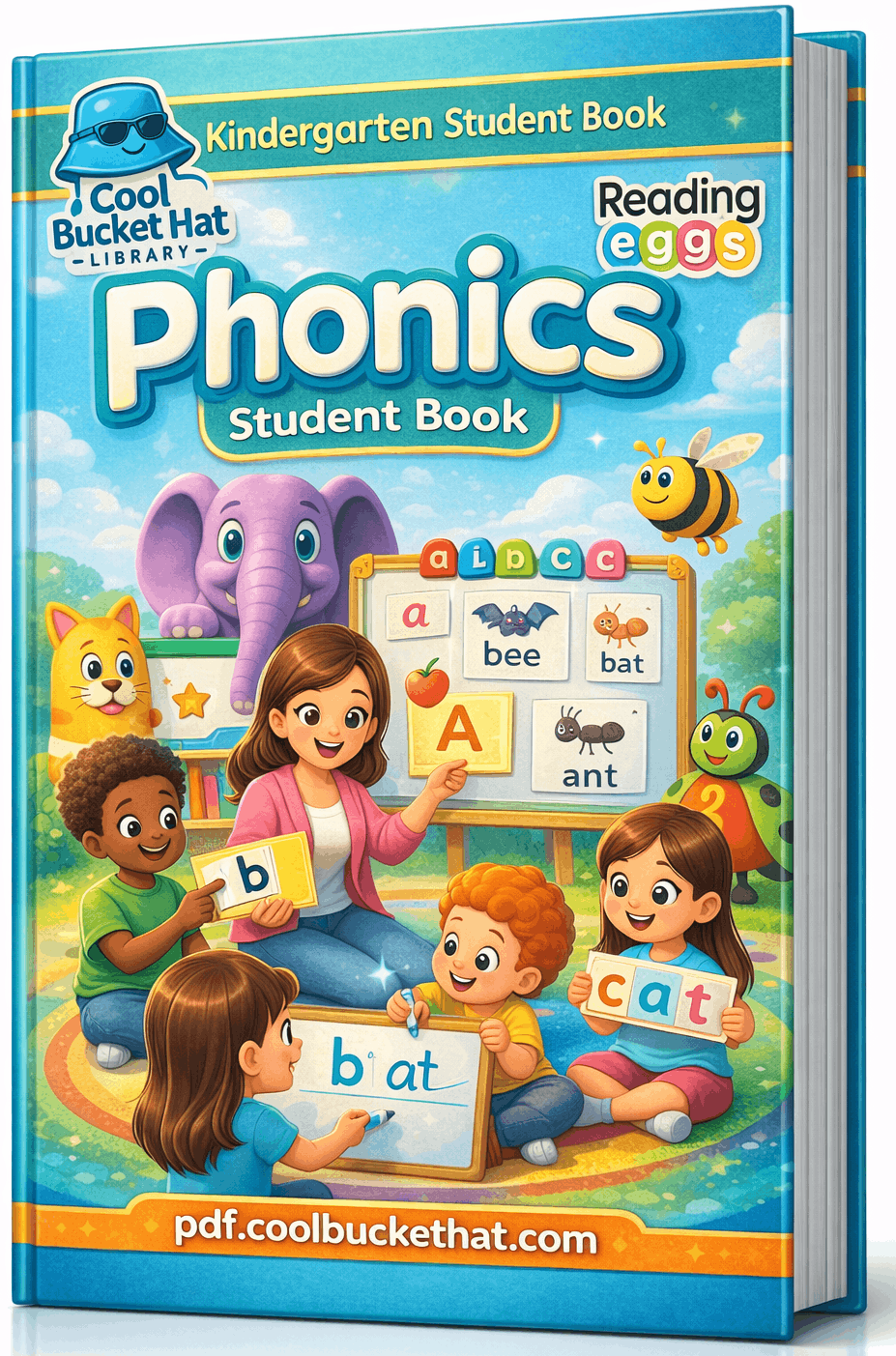
Phonics Student Book for Strong Reading Foundations
Phonics Student Book resources play a vital role in helping young learners build strong reading skills from the very beginning. When children start learning to read, they need structured guidance, clear explanations, and consistent practice. A well-designed phonics book provides exactly that. It introduces letter sounds step by step, supports blending practice, and gradually builds confidence in decoding words.
Early literacy development depends on solid phonics instruction. Without understanding how letters connect to sounds, reading can feel confusing. However, when phonics lessons are organized and predictable, children feel secure. As a result, they are more willing to practice and improve.
In this article, we will explore why phonics instruction matters, what features make a phonics book effective, and how it can be used successfully at home and in the classroom.
Why Phonics Instruction Is Important
Phonics teaches the relationship between letters and sounds. This knowledge allows children to decode unfamiliar words. Decoding is essential because it helps learners read independently.
When phonics skills are strong, students can:
Recognize letter sounds quickly
Blend sounds into words
Read with greater fluency
Improve spelling accuracy
Without phonics, children may rely on guessing words from pictures. While pictures can provide clues, decoding ensures accurate reading. Therefore, phonics instruction must be consistent and clear.
What Is a Phonics Student Book?
A Phonics Student Book is a structured learning resource designed to guide children through essential phonics skills. Lessons are usually organized in a logical sequence. Skills build upon one another gradually.
Typical components include:
Because lessons are presented step by step, confusion is minimized. Children understand what to expect in each section.
Key Features of an Effective Phonics Book
Not all phonics materials are equally effective. A strong student book should include the following features.
1. Clear Sound Instruction
Each letter sound should be introduced clearly. Visual cues and example words help reinforce understanding.
For example:
Simple explanations support early learners.
2. Gradual Skill Progression
Lessons should move from simple to complex. First, single letter sounds are taught. Then, blending begins. Later, digraphs and vowel patterns are introduced.
This logical progression prevents overwhelm.
3. Repetition for Mastery
Repetition strengthens memory. Word lists and short passages should review previously learned sounds.
Repeated exposure leads to automatic recognition.
4. Engaging Practice Activities
Worksheets, word-building tasks, and short stories keep students interested. Learning should not feel monotonous.
How Phonics Builds Reading Fluency
Fluency develops when decoding becomes automatic. At first, children may read slowly. They focus carefully on each sound.
Over time, blending becomes smoother. Words are recognized quickly. When decoding requires less effort, comprehension improves naturally.
A Phonics Student Book supports this development by offering consistent blending practice.
For example:
c + a + t = cat
b + a + t = bat
As patterns repeat, recognition becomes faster.
Supporting Spelling Through Phonics
Phonics instruction also strengthens spelling skills. When children understand sound-letter relationships, they can spell words logically.
For instance, if a child hears the /t/ sound at the end of “cat,” they know to write the letter “t.”
Spelling becomes less about memorization and more about sound awareness.
Strong phonics foundations reduce spelling errors over time.
Classroom Benefits of Using a Phonics Book
Teachers benefit from organized phonics programs. Clear lesson sequences reduce planning time. Consistent structure supports classroom management.
Small Group Instruction
Struggling readers can receive additional blending practice. Strong readers can move ahead confidently.
Literacy Centers
Independent practice activities can be assigned during center rotations.
Assessment Opportunities
Regular review sections allow teachers to track progress and identify areas that need reinforcement.
Because skills build logically, measurable growth can be observed.
Home Learning Advantages
Parents can use phonics books effectively at home with short daily sessions.
Establish a Routine
Ten to twenty minutes of focused phonics practice each day is enough. Consistency is more important than duration.
Read Together
Model sound blending first. Then allow your child to practice independently.
Encourage Writing
After reading word lists, ask your child to write the words. Writing reinforces memory.
Positive reinforcement builds confidence and motivation.
Common Challenges in Early Phonics
Some children may confuse similar letters, such as “b” and “d.” In these cases, visual aids and tracing practice can help.
Short vowel confusion is also common. For example, “i” and “e” may be mixed up. Clear pronunciation and repetition reduce errors.
Patience is essential. Every learner progresses at a unique pace.
Short, focused sessions prevent frustration.
Transitioning to Advanced Skills
Once foundational phonics skills are mastered, children can move to more complex patterns, such as:
Consonant blends
Digraphs (sh, ch, th)
Long vowel patterns
Silent e rules
A structured student book prepares learners for these transitions smoothly.
Because earlier lessons are solid, advanced concepts feel manageable.
Encouraging a Love of Reading
Phonics is the foundation, but enjoyment keeps children engaged. Short stories using learned phonics patterns should be included.
When children successfully read a short passage independently, pride develops.
Confidence leads to increased reading time. Increased reading time leads to stronger literacy skills.
A balanced approach that includes decoding and storytelling supports well-rounded readers.
Long-Term Academic Impact
Strong phonics skills influence all academic subjects. Reading is required in science, math, and social studies.
Students who decode confidently can focus on understanding content. Academic performance improves naturally.
Furthermore, writing becomes clearer and more structured.
The earlier phonics skills are mastered, the stronger long-term literacy outcomes become.
Creating a Positive Learning Environment
Encouragement should always be provided. Mistakes should be treated as learning opportunities.
Small achievements should be celebrated. Completing a lesson or reading a short story independently is meaningful progress.
Additionally, reading materials should match the learner’s level. Overly difficult texts can discourage beginners.
Short, simple practice builds steady growth.
Why Phonics Student Book Resources Are Essential
Phonics Student Book materials are essential because they provide structure, clarity, and repetition. These elements support mastery.
Without structured phonics, reading may rely too heavily on guessing. With phonics, decoding becomes reliable.
Clear instruction reduces confusion. Repetition strengthens retention. Gradual progression builds confidence.
Together, these factors create successful readers.
Final Thoughts
Phonics Student Book resources offer a practical and effective path toward strong reading foundations. By teaching sound-letter relationships step by step, they support decoding, spelling, and fluency.
Consistent daily practice, patient guidance, and structured lessons work together to build confidence. Over time, reading becomes smooth and natural.
When phonics instruction is clear and organized, children feel capable. That sense of capability encourages lifelong learning.
Strong readers are built on strong foundations. With the right phonics support, every child can develop the skills needed for reading success.